(Disclaimer: I am not associated with the Colbert Report. These are Word segments that I have written on my own from news stories cited. This is purely for practice sake.)
(Source article: Teenagers Are Building Their Own Job Engine)

Sunday, June 28, 2009


Sunday, June 21, 2009
Colbert Word - Week of June 21st
(Disclaimer: I am not associated with the Colbert Report. These are Word segments that I have written on my own from news stories cited. This is purely for practice sake.)
House Unveils Health Bill, Minus Key Details)
House Unveils Health Bill, Minus Key Details)
Friday, June 19, 2009
Sunday, June 14, 2009
Colbert Word - Week of June 14th
(Disclaimer: I am not associated with the Colbert Report. These are Word segments that I have written on my own from news stories cited. This is purely for practice sake.)
U.S. Officials to Continue to Engage Iran)
(Source articles:
Biden Questions Vote but Sticks to Policy on IranU.S. Officials to Continue to Engage Iran)
Friday, June 12, 2009
Colbert Word - Week of June 4th
I'm going to try to make this a weekly thing.
(Disclaimer: I am not associated with the Colbert Report. These are Word segments that I have written on my own from news stories cited. This is purely for practice sake.)
(Source article: Next Test: Value of $125,000-a-Year Teachers)
Sunday, June 07, 2009
Thursday, June 04, 2009
Tuesday, June 02, 2009
Looking Out Windows #1
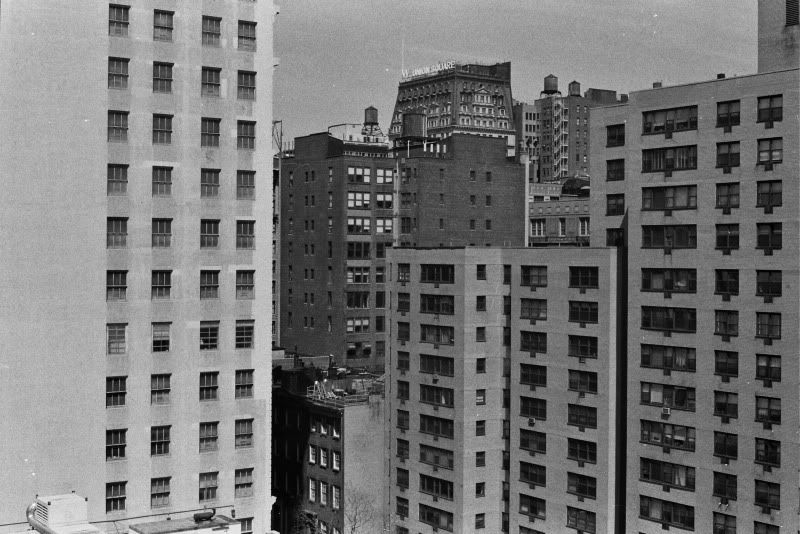 As in homage to one of my favorite blogs, I will start posting pictures that I have taken. I hope you enjoy. We start with Looking Out Windows #1.
Saturday, April 18, 2009
Xavier: Renegade Angel

With the final episode of the 2nd season airing, I thought I would post an article on Xavier: Renegade Angel. Xavier is one of my favorite shows and a shining example of marvelous writing with mind bending humor.
Forged from 2/4ths of the minds behind the art collective, PFFR, (who were also responsible for Wonder Showzen; the show about kids, for anyone, but kids), Vernon Chatman and John Lee bring us, Xavier: Renegade Angel. A CGI animated show about a philosophical “being” named Xavier who goes around interjecting himself into people’s lives, problems, minds, etc. It seems that wherever Xavier shouldn’t be, he’s there.
Few shows boast such intellectually dense episodes (clocking at 11 minutes each) that can often be supplemented with the most crass, lowbrow comedy you could think of. It’s not odd to sit through an episode and not be able to come out the end with something tangible. It’s become almost a requirement to watch an episode a few times to really understand what’s going on. Even at a certain point it feels like you’re being fucked with, which is part of what Chatman and Lee wants to do (I think). (Side note: Read this recent interview with The AV Club about their show to see more on that point.)
An example of that would from their previous show, Wonder Showzen, where on the final episode of the first season, (called “Patience”) the last 15 minutes of the show was the first 15 minutes, in reverse. Not surprisingly (to them or the viewers) the show was canceled in its second season. Xavier carries much of the same mentality as that example, but plays with the audience so well, that it can often leave you laughing and frustrated.
When you have 11 minutes to do a show, you really have to get the story out, but Xavier can be on two different spectrums. It can be so dense with jokes and story, that it’s to fast to follow, requiring subsequent viewings, or so mundane in its forward action that it can become essentially a talking head. Like in the episode “Shakashuri Blowdown”, Xavier “battles” himself with words that leads to more than half the episode of back and forth dialogue that absolutely goes no where.

The first episode of the first season Xavier postulates the existential question “What doth life?” and it seems to be the running theme of the show. A philosophical question that is virtually unanswerable and through the distractions and absurdities that Xavier takes us through, the question almost seems to be useless and hollow to begin with. Xavier is the type of character to ask those questions, but would be totally uninterested in finding the answer. It’s not surprising then that the writers of the show will often go out of it’s way to make a joke or to shit on something deep and meaningful, to express how consuming those questions can be. They’re able to take this daft character and dismantle institutions like religion, consumerism, violence, sex, the things that we all are aware of, but futile to stop it. (The episode “Signs from Godrilla” not only tackle all of those in 11 minutes, but does it hilariously.) It’s through this meandering, clueless character that embodies what our culture has become. Xavier himself talks like a surfer, looks nothing like a human, but has all of the stereotypical tropes a human character would have. He’s picked on because he looks different, by ignorant people, but soon learns their ignorance and picks on other people. His God is not Jesus or Allah, but himself; self-righteous and sure he can solve anyone’s problems. Xavier is more than a mirror to society, he is society, self aware, but uninterested in changing and above all, looking to be entertained.
That’s if you look that deep into the show. The show is made for you to laugh and if you learn something, that might be the opposite effect of what Chatman and Lee want. Or is it? Needless to say, there are few artistic things that challenge the viewer in its complacency and Xavier not only does it, but also makes fun of the fact that they have to do it.
Friday, February 20, 2009
2 or 3 Things on 2 Or 3 Things I Know About Her (TFR Article)
(Link to IFC Daily's mention about the article)
by Meseret Haddis

Looking back at Godard’s career, 2 or 3 Things I Know About Her comes at a pivotal transitional period for the filmmaker. The film follows a Parisian woman, Juliette, as she works as a prostitute and mother over the course of a day. Godard’s previous two films (Made in U.S.A. and Masculine Feminin) as well as those that followed (La Chinoise and Weekend) moved away from the “theatrics” of Pierrot Le Fou and towards political theater, which absorbed his later work. In certain points in Godard’s career, he is able to show that political and philosophical understanding almost have no differences, as they are linked toward social and emotional progress.

Alienation of Character and Content
The alienation effect is a tool pioneered by the German playwright Bertolt Brecht to insure that the audience doesn’t relate or empathize with a play’s characters. This can be achieved through disjointed scenes, self-aware characters and broken fourth walls. The audience is drawn away from a sense of emotional investment and, instead, focuses on the ideas being expressed in the play. Godard, a self-proclaimed student of Brecht, uses many of the playwright’s techniques in achieving this effect.
As the film begins, Juliette (Marina Vlady) is introduced. The woman is first described as Marina and then as Juliette; this break of the fourth wall continues throughout the film, as Juliette narrates her emotions and thoughts, often in the midst of conversation with another person. There isn’t much room for the audience to identify with Juliette, often because she seems cold and mechanical (a result, she admits, of the life she lives).
Other characters share the self-awareness that Juliette expresses, as well. During certain points in Juliette’s day, a store clerk or a bar fly will look into the camera and say two or three things about her self (“I come to the city twice a month,” “I have hazel eyes,” etc). As we follow Juliette, we are reminded of the invisible wall that separates her and us, and when we look to other characters we hope to find a connection or situation that is able to help us fall into the fantasy of the film, but it’s never there.
There seems to be a consistent attempt by Godard to keep the viewer aware, at all times, of his film’s fabrication, to continue to look critically at the expanding city of Paris that is being quietly destroyed by capitalism. Godard whispers in the final scene, “Thanks to Esso, I drive safely to the land of my dreams and I forget the rest. I forget Hiroshima, I forget Auschwitz, I forget Budapest, I forget Vietnam, I forget the S.M.I.G., I forget the housing shortage, I forget the famine in India. I’ve forgotten everything except that, as I’m going back to zero, I’ll have to use that as my point of departure.” Godard is warning us of the intended effects of a capitalist society, something that he mocks unabashedly later in the film Weekend. The quite citizen is what they want and their control has become so great that Godard himself has to whisper his thoughts to the audience, because what he is saying is creating new consciousness, new beginnings, essentially; destroying the old.

Modernization: Creating New Consciousness
2 or 3 Things is littered with shots of a growing “Paris Region,” as it is referred to in the film. Transition scenes are cut with shots of cranes and trucks at constructions sites, over which Godard’s narration is heard, attempting to draw connections between Juliette and the city’s modernization.
I don’t think it’s a coincidence that Brecht’s alienation technique and Marx’s theory of alienated labor are similar in what they express. They both speak to the disconnection between product and production. With Brecht, we are shown the idea or meaning behind the dialogue separating the audience from the play or film; with Marx, we are shown the consequences of capitalism as workers becomes disconnected with the objects he’s producing. Marx explains, “The externalization of the worker in his product means not only that his work becomes an object, an external existence, but also that it exists outside him independently, alien, an autonomous power, opposed to him. The life he has give to the object confronts him as hostile and alien.”[1]
Juliette is a character who’s aware of this disconnection, but seems incapable of doing anything about it. In one of the last scenes, she asks her husband, Robert, about their evening plans:
Robert: We’ll sleep… What’s the matter with you?
Juliette: And after that?
Robert: We’ll wake up.
Juliette: And after that?
Robert: The same. All over again. We’ll work. We’ll eat.
Juliette: And after that?
Robert: I don’t know. We’ll die.
Juliette: And after that?
Godard is making the point clear and how this can be related to a factory worker, of this disconnection from what we are doing. Juliette is aware of the monotony, but Robert is not. He’s confused as to why she would ask him these questions in the first place. Juliette later states, “I’ve changed and yet I’ve gone back to being myself, so what does that mean?” Whether or not this means that she’s done commodifying herself to her husband and other men is unclear, but the statement is posed to the audience. Will you make the change? Or have you not even realized the situation you are in?
[1] From Economic and Philosophic Manuscripts of 1844


“Language alone cannot accurately define an image,” Godard proclaims. But it’s also clear that both are being pushed together in our society. As Godard adds, “Words and images intermingle constantly. You can almost say that living in today’s world is rather like living in the middle of a big comic strip.” Godard continues to examine the scenes and questions if they’re being described effectively and accurately with images.
Godard wants to show the audience that a new language has to be created, that our language has a set of limitations. Even in 2 or 3 Things I Know About Her, we must be wary of words, particularly so when they come from Juliette (“Words never say what I’m really saying”). In one scene Juliette is getting her nails and hair done, and she’s being asked questions by the woman doing her nails, but before Juliette answer the questions she makes a comment for the audience (that the woman doesn’t hear) and then answers the question. At one point when she’s asked about her kids she says, “Words never say what I’m really saying.” And answers the woman by saying their fine, but very naughty, you know.” Godard continues this expression of what we say can’t always capture what we mean, that (as it is said in Le Petit Soldat) the only truth is photography.

By the end, as the title perhaps alludes to, the film feels intentionally incomplete. You can’t whittle down a woman to two or three things, because more is required to complete the picture. Godard isolates information and asks that we use it to better understand the picture and, more importantly, to change it. For the people of Paris to change the bad things that were happening they had to understand modernization, what its effect is on the people, economically and psychologically and by examining two or three things is a great way to get started.
2 Or 3 Things I Know About Her is playing at the Film Forum until February 24th.
Nicolas Roeg: An Auteur’s Visual Journey (TFR Article)
by Meseret Haddis
In examining Nicolas Roeg’s early films, it’s not surprising that the filmmaker officially broke into his career as a camera operator and cinematographer. There’s something extremely distinct in his films, especially the first two, Performance and Walkabout, wherein he functioned both as director and cinematographer. An arresting visual style, matched with simple performances and montage editing, helped to create a fevered, dream-like experience of images and sound.
Sound vs. Images
At many points in Roeg’s early films, there seems to be a conflicting motive between what we are seeing and what we are hearing. A great example of this type of juxtaposition is in Walkabout, where two children are stranded in the Australian Outback after their father kills himself, forced to find civilization under the guidance of an aborigine boy doing his walkabout (a journey of survival and an initiation into manhood). As the opening credits begin, we hear the scrambled noises that fall in between radio stations; the children later use the radio as a means of comfort. Treading along in this new environment and trying to survive in a desolate land, they cling to the one artifact that reminds them of their home.

After the credits end, a red brick wall fills the screen. The camera slowly tracks rightward as music from the aborigine instrument, the didgeridoo, is heard. Behind the brick wall, we see a cityscape of Sydney. As the shots of the city and people compile together, there are shorter, rightward tracking shots of the same brick wall, although the Australian Outback is now revealed in place of the city. The viewer transitions from one jungle to the next.

In the film Performance, Chaz – a thug on the getaway for disregarding his boss’ orders - hides in a retired musicians’ commune until he leave the country. Music is an important element in the film. In fact, here’s where the struggle between image and sound becomes clear: one must dominate the other. This relationship mirrors the conflict between the two main characters (Chaz and Turner), wherein one has to dominate the other. Mr. Turner’s struggle is an internal one, represented by the sound of the Moog synthesizer, while Chaz’s is a struggle of getting out of the country.
The Sun and the Lens Flare
While lens flare was once considered a clichéd indicator of amateur cinematography, Roeg uses it as an effective cinematic device. In Don’t Look Now, for instance - a story about a couple’s life after the death of their daughter – the wife, Laura, meets a blind psychic who views her daughter. At one point, the psychic warns Laura that her husband is in danger. Her husband, John, who is renovating a church, receives some mosaic pieces from the bishop and wants to compare them to the original. But as he steps onto the ladder, the camera is pointed directly at a floodlight. As he climbs past the camera, the lens flared, melded with an image of the psychic and giving an ominous premonition to John’s fate.
In Walkabout, the sun is constantly shown alongside the vast landscape of the Outback. It’s not odd that the sun’s appearance throughout the film mirrors the daunting feeling that the two children are experiencing while traveling in the wasteland. The constant barrage of heat also contributes to the mindset of these characters, becoming increasingly primal as the films progresses. After the children meet the aborigine boy, a montage of images of the sun leaves the viewer a little dry-mouthed and warm.
Blending and the Illusion of Continuity
Dissolves were a technique used during the early days of cinema that lead viewers from one image to another without losing the audience’s train of thought. The logic, thus, was to ease the viewers into scenes without startling them by a cut. However, if executed properly, viewers can certainly follow a story that is cut and mangled. On example is in Bad Timing, where a young woman and a doctor have a relationship that goes terribly wrong. The film opens with the young woman is in the hospital, and we watch as a doctor dances around the questions posed by the police. During this sequence, the doctor remembers aspects of his relationship with the young woman; a fight, a look, them having sex, etc. By the end of the film, we can piece together what happened to this young woman; although it feels disjointed and erratic, it’s actually quite logical. Roeg pointed out that the film is constructed according to the shape of human memory and, thus, doesn’t develop as one complete story but, rather, in pieces.
Order is something that Roeg likes to play with frequently, especially the flash-forward. In Performance, Mr. Turner is shown early in the film, long before he’s introduced. We don’t hear any dialogue, nor do we encounter any other significant information about him. But a connection is being created here between Turned and Chaz. Roeg uses the flash-forward in a way to temporarily disrupt continuity, or to give the illusion that things are out of sync when, in actuality, they aren’t.
There’s a particular scene in Don’t Look Now where John and Luara are having sex, but while they having sex the continuity is intercut with them dressing right after and it goes from them having sex to each of them dressing and back and forth until both acts are completed. Here, the illusion of time is suspended between the couple having sex and then re-dressing, but the cutting blends together the time of the couple having sex and of them dressing into one time frame, comparing the routine of their having sex with getting dressed.
There’s a definite arc to Roeg’s early films - from a visual director who captured counter-culture and beatniks in Performance, to a director who blended images and content to convey story and emotion in Walkabout, and to a complete dismantling of how continuity works in relation to what we are seeing. Roeg’s early work is a testament to a strong visual story and the progression of someone who wants to astound the audience by making them not want to look away from what they are seeing.
Samuel Fuller: 3 Films, 1 Sound (TFR Article)
By Meseret Haddis
I recently watched Samuel Fuller’s first three films, I Shot Jesse James, The Baron of Arizona and The Steel Helmet. Like Rossellini and Hitchcock, Fuller’s early films show a director in control of the frame, with a remarkable vision capable of capturing an audience through images. However, it was Fuller’s control of sound and music that I responded the strongest to.
A great example would be from The Baron of Arizona. In the film, James Reavis (Vincent Price) is on a mission to make an orphan girl, Sophia (Ellen Drew), the inheritor of Arizona. His quest takes him to a monastery in Spain where he has to forge the land rights that the King of Spain gave to the fictitious Baron of Arizona in an ancient book guarded by the monks of the monastery. James has spent years in the monastery until he is finally able to gain access into the library, where he can forge the claim. But before he is able to do that, another monk informs James that there is another copy of the King’s land rights at an official’s house in Madrid. By itself, the information doesn’t seem that devastating, but Fuller is able to build the importance and gravity of the James’s reaction with sound. At that moment of realization, James’ look is accompanied by a crash of noise that devolves into music.
Fuller through these three films is able to marry sound and image to create profound moments of sympathy, realization and anger. In I Shot Jesse James, music and sound are used to underscore a certain mood. The first time we see Bob Ford’s chance to kill Jesse is underscored with a spark of music. Here, the camera assumes Bob’ point of view, looking at the back of Jesse, suggesting his vulnerability as a character. But it isn’t until the sudden appearance of music that we fully realize the threat to Jesse’s life. The shot’s composition and angle alone couldn’t have conveyed this feeling; the music assists us.
The Steel Helmet provides another example. The film concerns Sgt. Zack (Gene Evans), a soldier fighting in the Korean War and the sole survivor of his company. In the first sequence, we see Sgt. Zack with his arms tied behind his back, crawling through the grass with the dead bodies of his company strewn about. The music coveys the physical struggle Zack is going through, contributing to a sense of anxiety within the audience. As he continues to struggle, we see a low angle shot of a gun pointed to the ground. Zack stops struggling and plays dead until caught by a Korean soldier. As the shots cut together between the soldier and Zack, the music and tension build. Similarly, when Zach is finally unbound, our anxiety lessens alongside the music.
In these three films, sound and image are often used in a way to build tension only to a point, so that only silence can alleviate or elevate a conflict. Take this clip from I Shot Jesse James, where a singer joins Bob Ford inside a bar and eventually plays a popular tune (which turns out to be a song about Jesse James). At a certain point, the singer remarks that Robert Ford is a dirty little coward, although Ford forces him to finish the song. At this point, Bob is grappling with what he has done to his friend, Jesse. Fuller adds no music to soften the blow of the look or the mood in the bar.
Fuller’s control of sound shows how effective it can be to convey a certain look or feeling with a soft tune or a loud noise. In these three films, Fuller understands the implication of what certain music or sounds have when married or juxtaposed to an image. He places such an importance on the music and sound in the beginning of these films that you can’t help but pay attention and notice when the sound is saying something that the images can’t express. Fuller understands that emotions can be told through looks, but that a look can have such a greater impact, if it’s accompanied by the right sound.
Sincerely, Not Surprised (TFR Article)
To The Academy,
The very fact that I am writing to you forgoes the fact that I don’t believe in you. By putting the delusional perception that you exist within an objective, artistic world aside, I want to talk to you about, well, you. I was not surprised by your nominations this year. Deep down in the crevasses of your psyche, I’m sure that you hoped to shake-up the business a little with a few glaring omissions and well, who cares about them anyways, right?
This, I’m only assuming, is how you went about your nominations:
Academy Member 1: “I’ve been seeing a lot of ads for ________ lately.”
Academy Member 2: “I know. It’s been making a lot of money, too.”
Academy Member 1: “Yeah. We don’t want to have any trouble with the industry by not forgetting to nominate ________.”
Academy Member 2: (Rubbing his beard) “Well let’s call ________ and see what he thinks.”
Academy Member 3: (On the phone) “I just got done having lunch with the producer of _______ and he thinks a nomination will do even more to bolster box office numbers.”
Academy Member 1: “Well I guess we can’t escape it now. Let’s give _______ a best picture nomination.”
(10 minutes later)
Academy Member 2: “Well that’s all the nominations.”
Academy Member 1: “Are we forgetting something?”
Academy Member 2: “If we did, it must not have been a very memorable film.”
Academy Member 1: “It’s a good thing we got ________ a nomination this year. Last year his film ________ was such a piece of shit.”
Academy Member 2: “That was his film? How did I miss that?”
Academy Member 1: “It was released earlier in the year.”
Academy Member 2: “That makes sense. I don’t really watch films before November. I mean, do you know how many films come out in a year?”
Academy Member 1: “A lot, I know. I’m just glad they release all the good ones near the time when we have to vote, so it makes it easier to do our jobs.”
Academy Member 2: “Yeah, you can knock out a few nominees in an afternoon.”
Academy Member 1: “So do you want to go get a bite to eat?”
Academy Member 2: “Sorry, I can’t. I got to meet _______ over at ________ so he can give me a lot of money for his nomination.”
Academy Member 1: “Good luck with that.”
Now I’m sure I’m not doing justice to the Academy by playing out this scene. Clearly, not all of the Academy Members are this nice and sincere.
What boggles my mind about your organization is this idea that you exist independent of the industry, picking films that truly represent our time and advancements in the art of film. But you know, and I know, that that is a load of bull. Slumdog Millionaire nominated for best picture? What are you, the Hollywood Foreign Press?
I’m a filmmaker for the people and I’m not in it for the awards or for the money. Down the line, if I ever were to make a film that garners the attention of the Academy for Best Direction or Best Picture, I would stop making films. Because that kind of praise isn’t worth sacrificing your artistic soul.
For me, to list a number of films and artists that you forgot to include in your nominations seems arbitrary because I don’t need a list of films to show proof of my convictions. To be honest, I haven’t seen any of the films that have been nominated, because, frankly, modern cinema is dead.
Sincerely,
Don’t Care About the Oscars
Sunday, January 18, 2009
It’s a Comic Book, Not a Film. (TFR Article)
By Meseret Haddis

Jean-Luc Godard’s Made in U.S.A. is hard to describe. Anna Karina plays Paula Nelson, a proto-type of noir-film detectives, who often narrates the film as she processes her thoughts. She’s a journalist who has come to Atlantic City (Paris) in search of her lover, Richard, whom she discovers is dead. The film follows her, following leads, questioning suspects, all to get down to the truth of Richard’s death.
It’s not surprising that when I watched this film I was reading as much as I was listening, which was something that started to happen when I began watching Godard’s post Pierrot Le Fou films. Made in U.S.A. and Pierrot Le Fou, both use the images of comic book characters and cartoons juxtaposed to images that were filmed. Masculin féminin, released in 1966, also splits narrative into boxes (or vignettes), mimicking the method of comic book storytelling. A comic book, much like these three Godard films, can have juxtaposed ideas, images, and dialogue; characters hare panel frames and, subsequently, thoughts.


What Godard does in Made in U.S.A., is transform each scene into a kind of panel. An example would Paula’s attempt to follow a lead into a doctor’s office), turning her head in paranoia while a nearby female doctor puts on her coat (pictured above). Later on, these two characters are introduced; Paula points a gun at her, and leads her into an examining room. When another gun-toting doctor enters, Paul turns her head again, mimicking the same motion she made a few seconds earlier. Through the flash-forward (something effectively used in comic books), we watch the sequence play-out in the context of the situation. This repetition of movements or sequences seems arbitrary at first but, when viewed in context, they fit together.

Made in U.S.A.’s visual style also creates parallels to comic books. A color palate of red, white and blue litters the background of many scenes, which all take place in Atlantic City, France (fictional, of course, but so is Gotham City). The Technicolor pops like the color in a new comic book pops, with an abrasive punch. Godard’s words don’t fail in their punch, either, as he takes the panel frames of how comic books are structured and uses that fragmentation to structure the film’s story.

The way the film’s narrative is atomized into pieces and fragments adds to the characters relationship to time the same way comic book characters relate to time. Super heroes are generally a certain age, perpetually defeating villains and saving the day. Made in U.S.A. mirrors that feeling. Paula tells a barman that she’s 22. He replies, “22 years from now, you’ll be double that,” to which Paula adds, “Yes, I’ll be 26.” Time has no effect on Paula, who is trying to discover the cause of Richard’s death. Time seems to stand still, with dates being mentioned, but again, without the context, they’re just words.
At the bar, Paula talks with a man named Thomas about sentences. Thomas believes that sentences are meaningless (”The dictionary says so”). Paula explains that words put together make sentences, “Which makes perfect sense”. Thomas replies, “I disagree. Sentences can’t both be meaningless and make sense.” Soon after, the barman interjects: “If you won’t make sentences, I can’t understand or serve you.” In reaction, Thomas conjures a few nonsensical sentences (”The glass isn’t in my wine,” “The barman is in the pen’s jacket pocket,” etc).

Godard’s film is a sentence with missing words, yet those missing words are essential to understanding the sentence/film. Each given word, like a frame in a comic book, is an important contributor to your understanding of the film. Sometimes the most memorable panels and frames in a comic book are at the beginning or end, but they are only memorable because of the frames between them. Which means essentially, that you need words to make a sentence, not the other way around.
Made in U.S.A. is now playing at the Film Forum until January 22.
The Realism of Wrestling (TFR Article)
By Meseret Haddis

Director Darren Aronofsky described The Wrestler as a back-to-basics film and, within the first few seconds that Mickey Rourke appears on-screen, this becomes immediately apparent. Randy “The Ram” Robinson is sitting in a chair with his head down; the camera sits low to the ground and at a distance, showing Randy in his costume as he sits in an elementary classroom. It’s just you and him. No music playing, no dramatic lighting.
The film follows Randy as he tries to restore his wrestling career. His chance to get on top again comes out of a rematch with an old wrestling rival. Randy prepares for the match by juicing up and getting stronger, but the mix of his age and steroids gives him a heart attack after a match that sidelines him. Randy then tries to repair his relationship with his daughter, whom he left when she was a child.
With its grainy picture that looks like it was shot on the family home camera, we quickly feel a sense of intimacy with Randy. The film works like a documentary and is without a definable visual style, relying solely on its performances.
I don’t think this film could have been as effective otherwise. Tracking shots, crane shots - all the visual aides that have become natural and almost unnoticeable in films – would have proven too distracting here. When Randy first examines the scar on his chest left by a bypass surgery, the camera zooms-in to grab a closer look. This image struck me: I felt as though I was watching was a documentary (of course, I knew it wasn’t, but that zoom was something instinctual, foreign even). It could have been just a simple close-up shot, through a cut, but that zoom reveals a subjective eye, something you notice in documentaries.
That eye has moments of subjectivity in a film that’s fairly objective throughout, as we follow Randy through his troubles. After Randy retires, he is working at a grocery store on his new shift at the deli counter. He puts on his hair net, walks to his “ring” at the back of the store and, soon, we begin to hear the cheer of the crowd. As he moves closer to the back of the deli counter, the cheers and roars become louder. Once he walks through the counter’s dividers, however, the roar stops. Of all the moments depicting Randy outside of the ring, it’s one of the most endearing. Randy’s persona feeds off of others and it’s clear that he doesn’t like to be alone. His contemplative moments are awkward and sometimes lead to destructive consequences (his heart attack, his last fight with his daughter, etc.).
The Wrestler is a beautiful photographic look at an American protagonist, someone who’s broken, beaten, old and weary, but continues to fight on for the love of the people. Randy is self destructive, something that is a product of years of physical abuse in the ring and emotional abuse outside of it. The realism of the sport of wrestling is that these are actual people who go home afterwards, who work and raise families. Randy’s struggle is that he’s never felt comfortable outside of the ring and why, when he tries to fit in with the world, he can’t stand it. He can’t stand the silence, the banality, and the heartbreak. He’d much rather live, flying between the ropes until he dies.
Che: A Viewer’s Guide (TFR Article)
By Meseret Haddis
I saw Che back in December during its road show circuit here in New York. These are some of my thoughts and impressions of the film, which are marked in italics.

The Argentine
For those going to see Che, now being screened at the IFC Center, it’s good to know a few things beforehand. At this point, it’s hard to not have an opinion about Che Guevera. For those who believe that he’s a symbol and a revolutionary, The Argentine is a film you want to see.
It’s tough to analyze something that’s such a symbol for the revolution. As far as objectively looking at Guevara goes, Soderbergh holds him up to an ideal that confirms most people’s preconceptions of the man.
Soderbergh remarked in a recent interview that it would be interesting to gauge people’s reactions to the film if they saw each film on a different weekend. Seeing the film back to back gives each film context, but it also doesn’t give the viewer breathing room. What’s interesting about the style of The Argentine is that it’s disjointed, often showing three different periods in Che’s life. This back and forth is accentuated by the visual style of each section.
The U.N. is shot in 16mm black and white while the Cuban revolution shot in Technicolor. The interplay between the visuals adds to the dynamic of the black and white images, which show a foreboding Che in the 60s after the revolution. In comparison, the color images represent the rich culture of the Cubans who want reformation.
Bencio Del Toro’s performance as Che is very likable; you are drawn to him, much like many Cuban’s were during the period. The disjointed feeling of the story adds to this likeability; when he’s speaking at the U.N. about the La Cabaña executions, it’s hard to look at the executions objectively because of what is being shown before and after it. He looks like a hero at the U.N., while boasting that the Cubans have executed and that they will keep on executing. In an odd way, Guevara appears more heroic at the beginning of the film than he does later on, in the mountains in Cuba.
Bencio Del Toro is playing Che as a sick and weak man, constantly coughing and holding his side and not being able to physically endure the struggles of fighting in the Sierra Maestra with his soldiers. His performance shows someone who’s moving forward because of will power.
To reiterate, the first part still holds Che as a revolutionary and it would be hard for someone to leave the film without a sense of this symbolic weight. Yes, the atrocities of La Cabaña are brought up, but they’re almost hidden, and you lose the context of those executions, which in a way diminish their importance. The disjointed structure is able to hide the bad within the intercutting of the events, but it also de-glamorizes what people think when it comes to the revolution and when it comes to Che .
In the second half, I don’t know what I’m going to expect - whether this symbol (Che) will be uplifted further (which may be difficult to do, since it seems like he could do no wrong at this point). If I weren’t already familiar with Guevara’s story, the first part of Soderbergh’s film would lead me to believe that this revolutionary leader could do no wrong. I don’t know if Soderbergh wanted the audience to think a certain way for the first half so that he could convince them of something else in the second half, but I think it will be interesting to see how he deals with Che’s representation for the Cuban revolution. There’s clearly a side that we’re suppose to take (and it’s Che’s side).

The Guerilla
Going into the second film, I was wondering if the symbol of Che would be maintained – (it’s clear that it won’t be maintained; slowly breaks down in the second film).
The first time we see Che, he’s bald, he’s older, and he looks like a different man. He’s in a disguise, but the duality of a figure like him having to impersonate a normal person in order to kick start a revolution in Bolivia, goes to what he believes as a bottom to top movement. Just because of the fame and success he is known for in Cuba, doesn’t make other revolutions any easier. In fact it proves harder for him, because he now has the US and Bolivian government focusing on eliminating him.
Probably the most signifying shot here is of Che lying in bed in a Bolivian hotel. He’s quietly reading the paper.
This comes off as very distinct change from the first film, where you can’t catch your breath in between switching time periods and locations. Here it’s just him, the symbol, bald and alone. His process in Bolivia begins similarly as it did in Cuba; recruit peasants and build support among the community, but what’s different now is that people are on to him. The Bolivian government is working for the United States, using propaganda to dissuade its people from assisting the rebel forces. Not only is the government against him, but many of the people he meets will also turn against him. This force of revolution, which pushed him through the mountains of Cuba to make his way to Havana, slowly loses its color to the point of destruction. Bad luck turns worse as his health deteriorates and becomes more of a problem as they trek through the mountains. The Guerilla does an exceptional job at debunking the idea that one man is capable of creating a revolution. Che wasn’t the reason the Cuban revolution succeeded - it was the people’s revolution, something that he tries to express in The Guerilla, but doesn’t translate like it did in Cuba.
The second film was narrative story. We went from disjointed pieces in the first film to a complete linear story that traverses the struggles of the Bolivia movement for 300 some days. I think the second film establishes the deconstruction of the symbol and the myth without glory. Che doesn’t die in glory and, in a way, it makes it personal, it demystifies Che and it shows that he’s just a person who was able to achieve these things. It’s not clear if that is a call for arms or not, although I don’t believe it is. I think it’s a great showing of how the myth of someone can not only be debunked but also destroyed. In the first film, he’s very affable and you want to be on his side, and in the second film you still are connected, but you know it’s not going well.
Once The Guerilla finished, Soderbergh came and took questions from the audience and it soon turned emotional. People were yelling out, “He was a murderer!” “He was a revolutionary!” and it was clear that the film brought produced strong emotions. Soderbergh ended up having to defend why he didn’t show the La Cabana executions, which were mentioned during Che’s U.N. speech. Everyone has an opinion of Che, and I believe that Soderbergh wanted us to look at him in a different light, regardless of these opinions. I think for those who want to keep him a symbol are heeded to watch the first film only, because you will be tested of that belief in the second film and it doesn’t end neatly justifying him as a symbol. But it’s good to have a sense of objectivity when viewing this film because, without it, you will be limiting yourself.
As Soderbergh adds in a recent interview:
“He is a murderer to them. He is irredeemable, and it’s hard. And sometimes you can have a reasonable conversation about it, and I can talk to them about context. And I can talk to them about balance and my reasons for showing the two periods that I show, and addressing the issues of the executions in the way we do. But some people literally can’t… I was having a discussion with this journalist in Europe, and he said, ‘I don’t know how you can make this film and not address the executions’… And I said, ‘It’s in the film. It’s in the UN. He says in a close-up, ‘We execute people. We’ve never denied it, and we’re going to keep executing people because this is a fight to the death’…
For people who don’t like Che, he is defined by the events at La Cabaña, and to me, the events at La Cabaña are consistent with what I read about him and what I heard about him.”
For people who know Che and his history, the film will be a great starting point for discussion of whether or not Soderbergh has a subjective aim or not. The film presents us with a history that goes beyond the T-shirt with that curious-looking, bearded man on the front.
Che opens January 9th at the IFC Center in New York City.
Sunday, January 11, 2009
April 3, 1998 (Diary of Tim Scheft)
Read the introduction to the diary here.
April 3, 1998
Dear feeling's eater,
I don't know what to say anymore. I'm having the worst time with women. My mother won't stop with the baby talk. Just because my brother became sterile from excessive bull riding, doesn't give anyone the right to push for children. In all honesty I would love to give my mother a grandchild, but that isn't the problem. It's really the womens fault. What does a guy have to do to get noticed? Maybe I'll start boxing or something. (NOTE: call Clark about boxing trainer) It's just to tough for me to start anything new, let alone meet a nice girl.
Dear feeling's eater,
I don't know what to say anymore. I'm having the worst time with women. My mother won't stop with the baby talk. Just because my brother became sterile from excessive bull riding, doesn't give anyone the right to push for children. In all honesty I would love to give my mother a grandchild, but that isn't the problem. It's really the womens fault. What does a guy have to do to get noticed? Maybe I'll start boxing or something. (NOTE: call Clark about boxing trainer) It's just to tough for me to start anything new, let alone meet a nice girl.
Like today, for example, I was sitting in a subway car, on my way home from work and something caught my attention. After squinting, it became apparent that the shape was actually a woman. For some reason she was looking my way and was winking incessantly. I looked behind me to see if she was signaling someone in morse code, but there was just an add for safe sex "Don't wink unless you know the consequences." I looked back at her and pointed to myself and she nodded assuredly.
The subway car skidded to a stop and I exited the car only to notice the woman follow me out. I turned around and looked at her curiously.
"Can I help you?" I inquired.
"Who me?" she said in a playful manner. "You could help me with a lot of things."
I blacked out for a few seconds as I suddenly realized, this is how many erotic videos and audio tapes start. I took a deep breath and examined her. She was wearing a business type light red blouse, with a black skirt and shiny heels.
"I'm sorry, I don't know what I can help you with." I stuttered.
"It's OK sweetie." she said as she took my hand.
I became like a child as we walked up the subway stairs to the street. Who was this woman taking my hand? The last time a woman took my hand I was spanked and put in time out.
It started to get dark out, but I felt safe with her. She saw my eyes light up when I looked at the cart selling snow cones and she stopped to buy me one.
"What kind do you want?" she asked.
"Blue." I responded. God I love blue flavored snow cones.
"That's my favorite to." she smiled as she said it. I almost fell to the ground, but thank god she caught me. We continued to walk, until we got to a hotel. She invited me to her room and I agreed on the condition that I could use the bathroom first. I hadn't gone since lunch.
Her room was nice, especially her bathroom. She said it was all done by a modern designer, Claubert. When I got out of the bathroom, I found her sitting on the bed, taking off her heels. I sat on a chair near the window, which I'm pretty sure was a desk, and took off my shoes, remembering what my mom says about shoes on the carpet "Patty Hearst wore shoes on the carpet and you know what happened to her."
We started to talk and she continued to undress. It became really awkward and at one point she was just in her pantyhose and hair clip. She just lunged at me in the chair and we had sex. It was amazing. I'm pretty sure I satisfied her, because when I asked her if I did, she said, "I'm pretty sure." We laid there, on the chair, her naked and me in just my overcoat, just taking in the modern decor. I wondered if Claubert had made love in his room and if he knew his chair/desk was the perfect place for two people to have sex and then organize their files. He probably did.
She got up and started dressing again. I asked her why she had sex with me.
"Because, I wanted to." she replied calmly.
I was happy and excited, since I thought we'd pretty much spend the rest of our lives together. I asked her what her name was. "What ever you want it to be, darling" she said.
I thought to myself, "Wow, she really is a catch. She just wants to please me."
I walked up to her and tried to kiss her, but she suddenly got cold. She asked what I was doing, and I said I was trying to kiss her. She said she didn't do that and was wondering when she was going to get paid.
That's when I realized she was a prostitute. Apparently my mother found her on a site, where she was listed as a "friendly companion who's willing to go all the way". When I later told my mother about it, she said she thought it meant to go all the way to the alter and that's what she told her. Lola, as I later found out her name, did give me the Tuesday special which was sex in a Claubert designed room (or "The Alter" as they called it).
I was a little paranoid when I finally got home. Partly because I didn't have the $400 on me that she required for her services and because their was a knife stuck in my front door with a note attached that said "$400 or your nuts. You decide."
I guess I'll have to go to the bank tomorrow. Ah women.
"It's OK sweetie." she said as she took my hand.
I became like a child as we walked up the subway stairs to the street. Who was this woman taking my hand? The last time a woman took my hand I was spanked and put in time out.
It started to get dark out, but I felt safe with her. She saw my eyes light up when I looked at the cart selling snow cones and she stopped to buy me one.
"What kind do you want?" she asked.
"Blue." I responded. God I love blue flavored snow cones.
"That's my favorite to." she smiled as she said it. I almost fell to the ground, but thank god she caught me. We continued to walk, until we got to a hotel. She invited me to her room and I agreed on the condition that I could use the bathroom first. I hadn't gone since lunch.
Her room was nice, especially her bathroom. She said it was all done by a modern designer, Claubert. When I got out of the bathroom, I found her sitting on the bed, taking off her heels. I sat on a chair near the window, which I'm pretty sure was a desk, and took off my shoes, remembering what my mom says about shoes on the carpet "Patty Hearst wore shoes on the carpet and you know what happened to her."
We started to talk and she continued to undress. It became really awkward and at one point she was just in her pantyhose and hair clip. She just lunged at me in the chair and we had sex. It was amazing. I'm pretty sure I satisfied her, because when I asked her if I did, she said, "I'm pretty sure." We laid there, on the chair, her naked and me in just my overcoat, just taking in the modern decor. I wondered if Claubert had made love in his room and if he knew his chair/desk was the perfect place for two people to have sex and then organize their files. He probably did.
She got up and started dressing again. I asked her why she had sex with me.
"Because, I wanted to." she replied calmly.
I was happy and excited, since I thought we'd pretty much spend the rest of our lives together. I asked her what her name was. "What ever you want it to be, darling" she said.
I thought to myself, "Wow, she really is a catch. She just wants to please me."
I walked up to her and tried to kiss her, but she suddenly got cold. She asked what I was doing, and I said I was trying to kiss her. She said she didn't do that and was wondering when she was going to get paid.
That's when I realized she was a prostitute. Apparently my mother found her on a site, where she was listed as a "friendly companion who's willing to go all the way". When I later told my mother about it, she said she thought it meant to go all the way to the alter and that's what she told her. Lola, as I later found out her name, did give me the Tuesday special which was sex in a Claubert designed room (or "The Alter" as they called it).
I was a little paranoid when I finally got home. Partly because I didn't have the $400 on me that she required for her services and because their was a knife stuck in my front door with a note attached that said "$400 or your nuts. You decide."
I guess I'll have to go to the bank tomorrow. Ah women.
The Diary of Tim Scheft
Introduction to "The Diary of Tim Scheft" by Meseret Haddis:
How many of you keep a diary? Captain's Log? Journal? Memoir? I personally don't keep a diary, because the thought of reliving my day on paper is nauseating. But I have found it a common occurrence of people finding writings or things of the sort, in the trash, or in coffins and then posting them on the internet, or showing them to their friends. It's a odd thing finding something that wasn't meant for your eyes or wasn't of very much value to the original person. It's less illegal than voyeurism, but still as thrilling.
This here is the diary of Tim Scheft. Let me tell you the story of how I happened upon the diary. One day, I was walking on Mercer street, in lower Manhattan, admiring the noises of an Armenian man yelling at Dutch tourists for not understanding that they aren't the only people walking the sidewalk. Walking along the street, I saw a small little grassy area, which is amazing to find in Manhattan. For people who move to a city that has so much concrete per square mile than almost any other city, they sure love there small grassy patches. Lying in them, reading Kafka, silently judging people as they walk by.
How many of you keep a diary? Captain's Log? Journal? Memoir? I personally don't keep a diary, because the thought of reliving my day on paper is nauseating. But I have found it a common occurrence of people finding writings or things of the sort, in the trash, or in coffins and then posting them on the internet, or showing them to their friends. It's a odd thing finding something that wasn't meant for your eyes or wasn't of very much value to the original person. It's less illegal than voyeurism, but still as thrilling.
This here is the diary of Tim Scheft. Let me tell you the story of how I happened upon the diary. One day, I was walking on Mercer street, in lower Manhattan, admiring the noises of an Armenian man yelling at Dutch tourists for not understanding that they aren't the only people walking the sidewalk. Walking along the street, I saw a small little grassy area, which is amazing to find in Manhattan. For people who move to a city that has so much concrete per square mile than almost any other city, they sure love there small grassy patches. Lying in them, reading Kafka, silently judging people as they walk by.
Walking by I noticed a park bench, but what was under it really grabbed my attention. From my distance I couldn't asses the hand sized item. Being a citizen of America and especially a citizen of New York, I adhered to the common practices of civilized humans. Before approaching said item, I called the police and the bomb squad to be safe. I saw something, now I must say something about it. After they cornered off three blocks, putting traffic into a deadlock, they decreed the suspicious item not harmful. After a steep fine the started to pack up there things. Apparently it's a new policy, where if the police are tipped, and the bomb squad finds nothing dangerous, the person that tips the police off is actually fined for the inconvenience. So I proceeded to pick up the item, which was this diary of Tim Scheft. I began reading his diary, partly because I couldn't find him (he wasn't listed) and I had recently burned all my books. Little piece of advice: Don't sign up for a book burning, without contacting your attorney first.
Subscribe to:
Posts (Atom)


 Posts
Posts

